Making a Multi-Billion-Euro Industry Trust AI
As Senior Design Engineer on an AI platform for the construction industry, I designed and built an AI agent that teams used to doing everything by hand actually trust, turning hours of manual checking into minutes and helping sales teams send 3× more quotes to win more deals.
Problem
The AI was fast, but nobody trusted it enough to save time
Suppliers price long lists of building items by hand: printed pages, a pen, a ruler, hours of typing into Excel. Scalera's AI could do it in minutes, yet in 59 customer calls I heard the same thing: teams still checked every line.
pages in a large construction tender
to price one tender by hand
every AI suggestion re-checked, even when it was right
Scalera was about to launch an AI agent that could do far more. As an empty chat box it would have failed the same way: people wouldn't know what to ask, couldn't see how it worked, and wouldn't let it touch their offers.
Key Decision
Let the agent do the work, and keep people in charge of every change
The calls pointed to three things people need before they let software act for them. I designed one part of the agent for each:
Step 1
Start from a real task, and show every step
Instead of an empty prompt, a Use cases page lists the jobs teams do every week. One click starts the agent, which shows each step in plain words and says what it left out and why.
Step 2
Turn every change into a proposal someone approves
The agent never edits anything by itself. It prepares each change as a card with its confidence, suggests the safest changes first, and waits for a person to click Apply.
Step 3
State the doubt right next to the recommendation
People upload supplier quotes and the agent lines them up. The card shows who is cheapest, by how much, and warns when that could still change.
Designing for the model, not around it
What happens when the agent isn't sure
AI sounds just as confident when it's wrong. When the output is a priced offer, that costs money, so the interface shows the doubt the model hides.
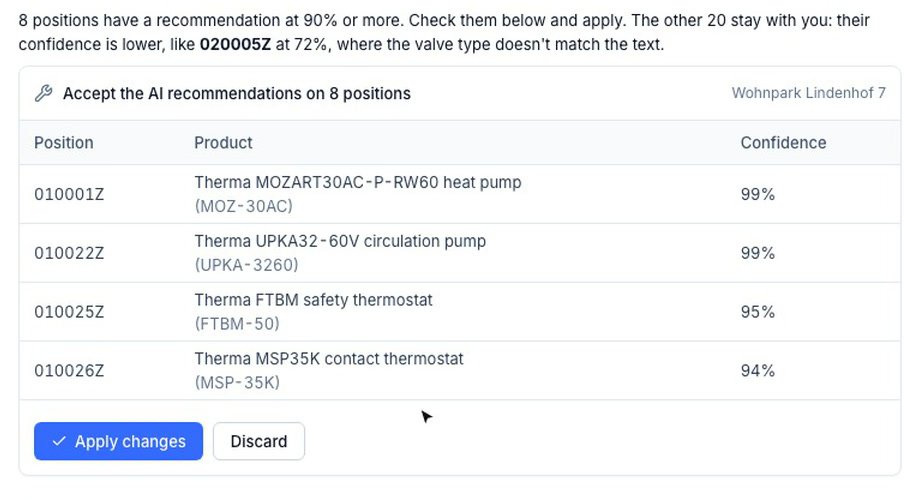
Uncertainty
Say what the agent didn't touch, and why
Every proposal names what it didn't touch and why, so the reviewer knows exactly where their attention is needed.
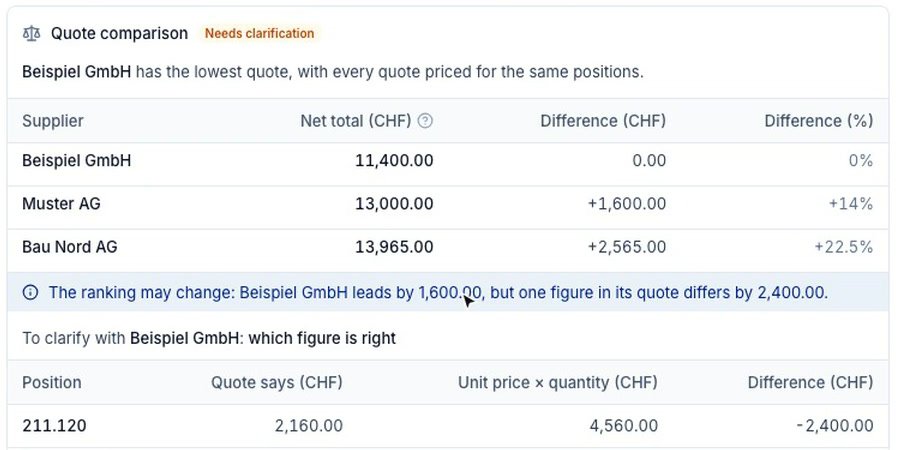
Escalation
Warn when the answer could still change
When the doubt is bigger than the margin, the card says "Needs clarification" and turns it into a question for the right person.
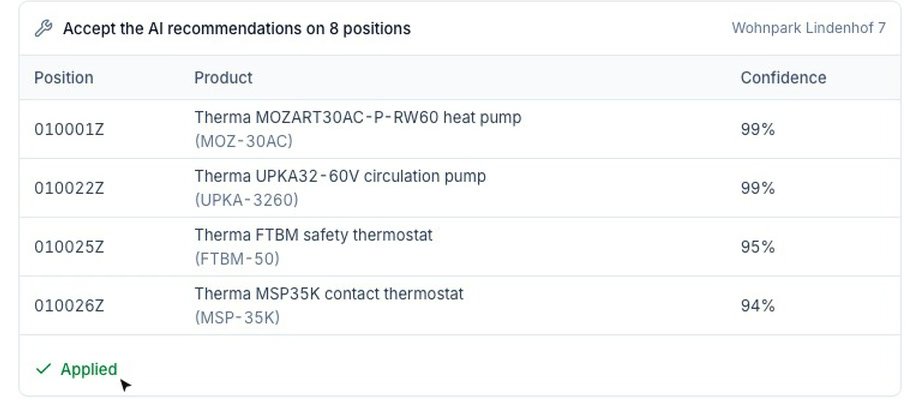
Recovery
Show the result where the action was taken
Applied, partly skipped or refused: the result stays in the card, with the reason, not in a toast that disappears.
Outcome
From checking every line to approving the ones that matter.
of products assigned by accepting the AI's suggestion, after the review redesign
manufacturers, distributors and contractors using Scalera
more quotes sent by the same sales team, so more chances to win deals
When people can see why the AI chose something, they accept it: about 70% of its suggestions now. Work that took hours takes minutes, so the same team sends 3× more quotes, with 3× more chances to close a deal.
Speed figures: Scalera customer results on scalera.ai (ACO, Frauenthal, dormakaba). Acceptance rate: Scalera product analytics.
Process
How I built it
I owned research and design, and built most of the agent's front-end with the engineers behind the agent service. Insights from 59 customer calls and PostHog data became design rules I prototyped with the team and shipped in React and TypeScript.




Videos recorded in the live app on a test workspace. Agent replies were replayed in the browser, so nothing on the server changed. Customer names replaced.